Immortality
A History of the Vampire in Popular CultureImmortality is the decisive fantasy behind the modern vampire: a state that promises freedom from ageing, disease, and death while threatening to turn existence into an endless sentence. Its erotic power comes from the image of the eternally young, beautiful, charismatic being who stands apart from ordinary humanity; its horror emerges when eternity becomes loneliness, guilt, repetition, and the obligation to outlive every beloved person and every familiar world.
The Promise of Eternal Life
Immortality is first presented as an erotic and social ideal. The vampire may remain physically young, sexually powerful, wealthy, elegant, and confident while everyone else is subject to time. The appeal is not merely survival. It is the removal of the deadline that governs ordinary life: the fear of growing old, running out of time, failing to finish a project, or dying before love and ambition have been fulfilled. In that sense, eternal life promises unlimited opportunities. A person could spend years on a single undertaking, travel for months without consequence, or leave an inadequate relationship with the knowledge that another lifetime might bring another chance.
The fantasy is especially vivid in vampire culture because fictional vampires can often control their apparent age and appearance. Early revenants were simply dead bodies that had not remained in the grave, but later literary vampires acquired the freedom to make immortality look desirable. In Bram Stoker’s Dracula, the Count’s long solitude in his Carpathian castle has aged him into a desiccated, ancient figure. When he travels to London to pursue Mina Murray, he transforms himself into a handsome man in the prime of life. His physical renewal is therefore also a strategy of seduction: immortality becomes attractive by concealing the corpse beneath the glamour.
Popular culture repeatedly turns that promise into a compact slogan of pleasure. The Lost Boys condenses the fantasy into a life of sleeping through the day, partying through the night, never growing old, and never dying. This vision removes the ordinary obligations of time and replaces them with nocturnal freedom. It is deliberately bright and pleasurable, but its very neatness reveals the bargain being offered: an existence detached from the biological rhythms and social expectations that govern human life.
The Cost of Outliving the World
The same condition becomes terrifying once the consequences of duration are taken seriously. Immortality means watching children, grandchildren, and later generations grow old and die, while the immortal remains trapped in continuity. It also means witnessing the destruction of places, cultures, landscapes, and eventually the planet itself. Climate change would not remain an abstract possibility for someone who could survive indefinitely; it would become an unfolding reality that could not be escaped through the ordinary human limit of death. Eternal life therefore converts history from something people inherit into something the immortal is forced to endure.
The book’s discussion of public reactions to immortality makes this reversal explicit. A few respondents imagined endless life as exhilarating, a chance to experience centuries or thousands of years and finally read, watch, hear, and visit everything previously postponed. Most rejected it because art, literature, and philosophy derive much of their urgency from mortality. Finitude gives experience a boundary and decisions a pressure. Without that boundary, life might not become richer but flatter, slower, and finally meaningless. The fear is not only death; it is boredom without termination.
The deepest objection is relational. To live forever would require repeated bereavement, as every mortal attachment eventually ended while the immortal continued. The prospect of watching everything and everyone one loved wither and die is described not as a prize but as a punishment. This is why immortality often resembles imprisonment rather than freedom. The immortal may possess beauty, money, and mobility, yet remains unable to leave the condition itself. The fantasy of endless life thus contains a hidden image of captivity: the self locked permanently inside its own consciousness.
Vampire Stories as Mortality Tests
Vampire narratives dramatize this contradiction through characters whose supernatural longevity magnifies ordinary human grief. Dracula has existed through centuries of hardship and loss, driven by the desire to avenge his dead love, Elisabeta, and recover her in Mina Murray. His immortality gives him power, but it does not release him from mourning. When he finally has the possibility of making Mina immortal, he hesitates because he understands that undeath would impose the same horror upon the person he loves. Even a predatory immortal can recognize that eternal existence is not an uncomplicated gift.
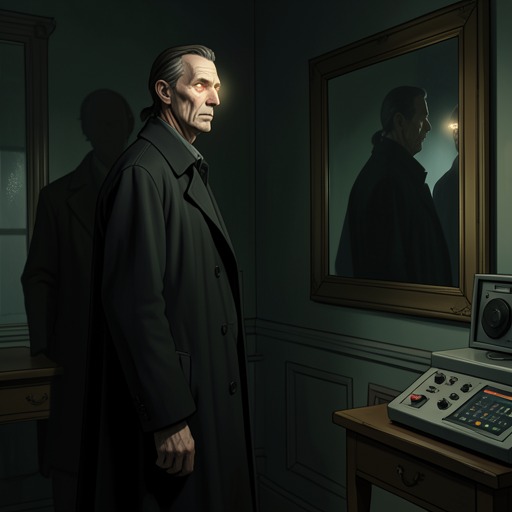
The later adaptation of Dracula makes the desire for an ending even more direct. Dracula’s encounter with Zoe Van Helsing, whose blood is poisoned by cancer, turns blood into a means of suicide. Rather than merely being defeated, he accepts death as a final escape from centuries he never wanted to endure. He is ashamed of being unable to die and of having witnessed the deaths of his mortal family and companions. His hatred of mirrors reflects not a fear of exposure to others but a confrontation with his own ancient, crumbling body. Immortality has preserved him while making his true condition impossible to ignore.
The final death is therefore framed as release rather than defeat. Dracula enters oblivion with Agatha Van Helsing and Zoe Van Helsing, the adversary who has remained his equal across the centuries. Their shared ending joins intimacy, shame, and extinction: the immortal finally receives the death that ordinary humans spend their lives trying to postpone. In this form, the vampire story reverses the usual hierarchy. Mortals appear fragile because they die, but the immortal is the one deprived of rest, closure, and the right to end.
Solitude, Repetition, and the Need for Company
Immortality also creates a problem of companionship. A long life is bearable only if it can be shared, yet the immortal’s relationships are structurally unequal: human companions age while the vampire remains, and immortal companions may reproduce the same conflicts forever. The result is an existence that can be socially crowded but emotionally solitary. A vampire may seek lovers, followers, or rivals not simply from desire or appetite but to escape the unbearable prospect of endless time alone.
This tension shapes the relationship between Louis de Pointe du Lac and Lestat de Lioncourt in Interview with the Vampire. Louis accepts transformation after grief has made him court death, hoping vampirism will provide an escape from the pain of losing his wife and child. Instead, immortality traps him inside that pain. Lestat offers companionship and confidence, but also exercises control; his privileged bravado conceals a desperate need for company, while Louis retains an empathy that makes human predation morally repellent. Their relationship shows that eternal life does not erase personality or ethical conflict. It stretches both across an indefinite duration.
The same problem appears in the slow, dreamlike world of Adam and Eve in Only Lovers Left Alive. Their existence has an otherworldly beauty because neither character is forced to hurry. Everything can wait when the characters have all the time in the world. Yet the film’s atmosphere also suggests the burden of an existence detached from ordinary urgency. Immortality produces aesthetic spaciousness and emotional weariness at once: the world becomes beautiful because time has slowed, but that same slowness threatens to become hollow.
Viago von Dorna Schmarten Scheden Heimburg’s attachment to Katherine offers a more comic version of the same need. Katherine, his former human girlfriend, has reached the age of 96 while Viago remains a vampire. He watches through her windows and finally confesses the truth, after which she agrees to be turned so they can remain together forever. Their relationship makes the age gap absurd in an unexpected direction: the supposedly ancient vampire is physically youthful, while the human lover is elderly. The proposed transformation is less a conquest than an attempt to make shared time possible at last.
Beauty, Power, and Cultural Change
The modern vampire’s appeal depends heavily on the distinction between eternal life and eternal youth. Western culture places extraordinary value on physical beauty, strength, virility, and the appearance of control. The beauty industry monetizes anxiety about wrinkles and bodily decline, while popular media often narrows the social value of ageing bodies. Against that pressure, the vampire offers a fantasy of never physically decaying. The immortal body becomes a permanent refusal of time’s visible effects.
That fantasy is not politically neutral. The vampire is often imagined as human but improved: sharper-witted, better dressed, more confident, and less dependent on social approval. This confidence gives the creature a form of power that many readers and viewers recognize as wish fulfilment. The vampire simply exists beyond the need for permission, and the fantasy suggests that ordinary people might also long for such absolute self-possession. At the same time, the creature’s superiority can reproduce older hierarchies of class, beauty, gender, and sexuality.
Vampire fiction repeatedly revises the rules of that superiority. Varney the Vampire helped establish the sharpened, fang-like teeth associated with later vampires, but Varney is also made sympathetic: he resists his animal instincts and eventually kills himself to escape his eternal fate. Carmilla develops the night creature into an elegant, emotionally and physically predatory figure, while later stories permit vampires to be heroes, lovers, outsiders, or comic domestic figures rather than only monsters. Count Orlok in Nosferatu rejects erotic glamour in favor of threatening ugliness, whereas Edward Cullen in Twilight is a sanitized, wealthy, morally restrained vampire whose modern house and conscience make him safe for public consumption.
The cultural history of the vampire also shows how immortality is repeatedly negotiated against collective fear. Nineteenth-century New England vampire panic interpreted tuberculosis as the dead returning to drain the life of surviving relatives. In the eighteenth-century vampire craze, villages in eastern Europe exhumed corpses believed to be responsible for successive deaths. The same desire to identify and control the undead later appeared in media panics, including the campaign against horror comics after the Gorbals Vampire incident. By contrast, the goth subculture that emerged from post-punk clubs in northern England during the early 1980s transformed the imagery of death, mourning, and the undead into a living culture of music, fashion, and identity.
Immortality as a Safe Fantasy
The enduring appeal of immortality may lie precisely in its unreality. The vampire allows audiences to imagine glamour, power, eternal youth, and nocturnal freedom without having to accept the literal consequences of becoming undead. It is safe to desire bloodied immortality when the fantasy remains on the page, screen, stage, or dance floor. The distance between fiction and life permits fascination without the actual burden of endless bereavement or permanent imprisonment inside the self.
This safety also explains why vampire stories continue to change. Immortality can support romance, horror, comedy, social satire, erotic transgression, religious anxiety, and reflections on disease and public fear. It can appear as a lavish privilege in one story, a punishment in another, or a mundane domestic problem among undead housemates. Across those variations, the central contradiction remains stable: the immortal possesses what mortals fear losing, but loses the very finitude that gives mortal experience urgency.
The final paradox is that the fantasy of never dying keeps returning because death remains unavoidable. More than two centuries after John William Polidori’s The Vampyre and nearly 125 years after Bram Stoker first published Dracula, the desire for the sharpest fangs shows no sign of disappearing. Immortality promises escape from the body’s decline, yet vampire fiction repeatedly discovers that meaning depends on limits. The attraction is not simply eternal life. It is the chance to look at mortality from the other side, briefly and imaginatively, before returning to the finite world that makes love, art, choice, and time matter.